It’s pretty intuitively obvious — at least to people born in this day and place — that cleanliness is better than filth. (I suppose that was rather less obvious in the Middle Ages and up through the Industrial Revolution, although the idea of hygiene far predates that — see Leviticus! — so I’m not sure what was wrong with us as a people that we were so obtuse. But I digress…)
However, it is also unfortunately true that what we use to clean with is, in this day and place, often toxic. Basic concepts that used to be rooted in natural cleansing agents have been replaced by imposters made with synthesized chemicals.
So that’s a lose-lose proposition, right? Not quite. It just means we have to be a bit more attentive when choosing cleaning supplies. Consider, for instance, the familiar scents of pine or lemon in cleaning supplies. Why do you reckon those are the scents associated with cleaning supplies? Pine oil and lemon oil both have qualities that lend themselves to cleaning. I imagine “pine cleanser” and “lemon cleanser” have been around for centuries; they just used to be made with real pine and actual lemon. Likewise, we can still find more natural cleaning products today; we just have sift through all the other options to find them.
Avoiding Cleansers Altogether
Before I mention some of the cleanser options, I want to mention another alternative: avoiding cleaning fluids.
If that sounds crazy at first blush, hear me out. In many cases, you can avoid the use of a liquid or powdered cleanser at all, simply by having the right cleaning tool. We love Norwex products for this. Their high-quality microfiber lets us do a lot of our cleaning with no chemicals other than H2O. Washing windows, wiping counters, mopping floors, etc. can all be done (at least on most occasions) with just microfiber and water.
I don’t sell it — ‘though we do use it regularly — but if you don’t have another source, my mom does sell it, and she’s great at answering questions, etc.
If you do want general-purpose cleaners, I hear good things about Mrs. Meyer’s and Seventh Generation, but I don’t have a lot of experience with them. Many of the “natural” cleansers I do have experience with simply don’t work, so do try to get some word-of-mouth recommendations before investing in something. They can get a little pricey (especially if they don’t work!)
The Dishwasher & Laundry
Even if you do without things like all-purpose cleaner and glass cleaner, you can’t just wipe down the dishes in your dishwasher or the laundry in your washing machine! So there are some things that require cleaning “substances.” Norwex has laundry detergent and wool dryer balls and I like them. I also like wool dryer balls from other reputable companies like Woolzies and Molly’s Suds. Molly’s Suds also makes good detergent, as does Mrs. Meyer’s. (I’ve heard good things about Charlie’s Soap, too, but I haven’t used it.)
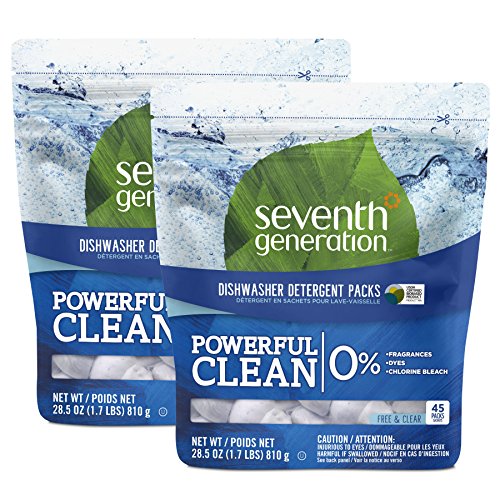
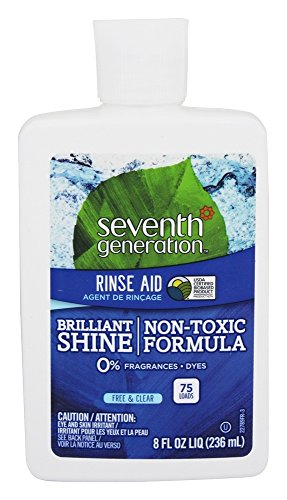
In the dishwasher, we stick exclusively with Seventh Generation. (See below.) We have extremely hard water where we live, and that’s an extra challenge for cleaning products if you want them to get the job done. We’ve found a few options that work for some other things (like laundry) but the only two brands we’ve found that work in our dishwasher are Cascade (which I’d rather not use regularly) and Seventh Generation.
Seventh Generation Dishwasher Detergent Packs, Free & Clear, 90 countSeventh Generation Dishwasher Rinse Aid – 8 oz – 2 pk
Liquid Soap
Liquid soap is another good basic. Not only is it useful for washing hands and dishes; liquid soap can serve as a sort of all-purpose cleaner, too. It’s important to me that my liquid soap not be too runny/thin (I find that then it all runs off before I have a chance to, say, suds a washcloth) and it has to suds adequately to let me spread it around where I need it.
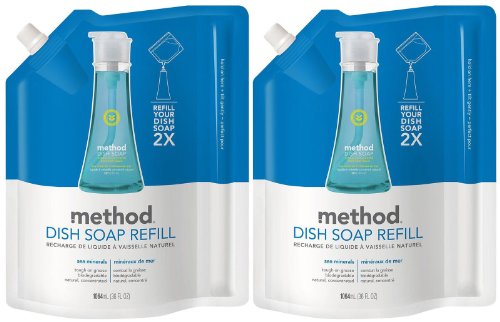
Method has some good basic ones (they have scented options, too, if you prefer those — they’re pleasant, by and large, not cloying), and I really like that we can buy refill packs like these to save on cost and packaging:
Method Dish Pump Refill – 36 oz – Sea Minerals – 2 pkMethod Gel Hand Soap Refill, Sweet Water, 34 Ounce (Pack 6)

Disinfectant
If you’re using Norwex microfiber, you shouldn’t typically need disinfectant. The microfiber is fine enough that it picks up 99%+ of the bacteria, etc. But sometimes you might want to spray something you can’t easily wipe with microfiber. Or maybe you’re like me and it just makes you feel better to spray certain things with disinfectant — it’s a mental thing.
In those cases, my go-to is a pair of small spray bottles. One is full of hydrogen peroxide (an opaque bottle is better than transparent, and refill it regularly to ensure it’s fresh); the other of white vinegar. You spray the surface first with one, then (while it’s still wet) with the other.
I have lost my source reference (if anyone knows where to find it, I’d love to locate it again!), but I read a study a while back — done at Virginia Tech, I think? — that found this mixture to be very effective. But you don’t mix it ahead of time. When the two combine, the reaction creates a new chemical that’s a good disinfectant, but it also breaks down quickly and is gone.
(Along sort of similar lines, I keep seeing ads on Facebook from Force of Nature. Has anyone tried that? It looks intriguing.)